
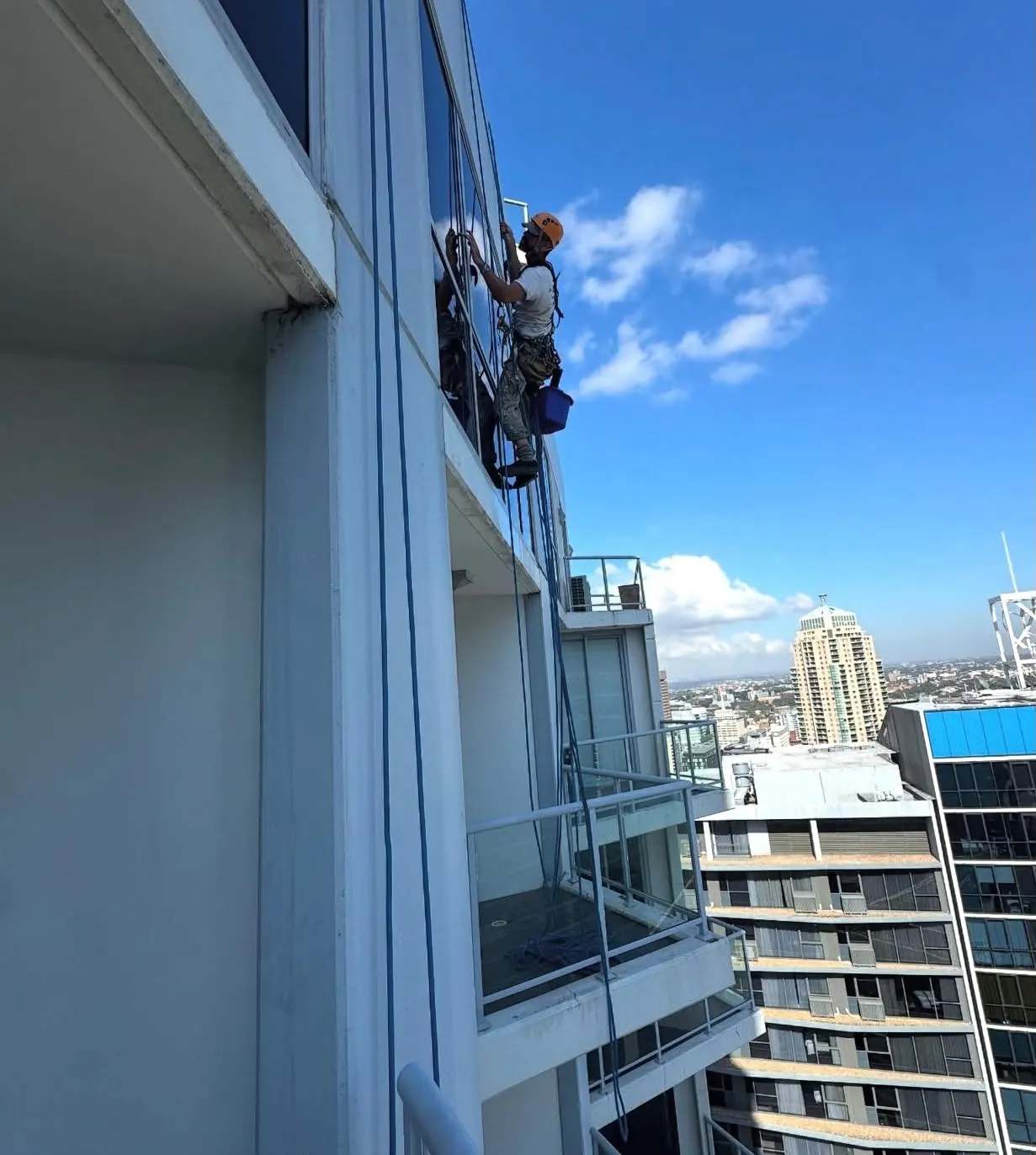
Caulking and sealing for high-rise buildings
Expansion joints, window perimeters and façade sealant cut out and replaced from the rope, to stop leaks at the source.
- Correct joint depth and backing rod
- Sealants matched to the joint
- No scaffold
★ 5.0 on Google (12 reviews) · NSW licence 478674C · $20M public liability · CM3 prequalified
Get a free quote
We reply the same day. ★ 5.0 from 12 Google reviews
Caulking and sealing in short
Tactical Height Solutions provides caulking and sealing for buildings in Sydney using IRATA-certified rope access technicians instead of scaffolding. Expansion joints, window perimeters and façade sealant cut out and replaced from the rope, to stop leaks at the source. Every job is supervised by an IRATA Level 3 technician, carried out under NSW contractor licence 478674C, and covered by $20 million public liability insurance. Site inspections in Sydney are free, enquiries get a reply the same day, and most jobs can start within 48 hours of an approved quote.
Updated October 2026 by Naldo Neto, IRATA Level 3 and licensed painter.
Sealant is one of the cheapest parts of a building and one of the most common causes of leaks. Most façade sealants last somewhere between 10 and 20 years before they harden, crack or pull away from the joint, and once they fail, water gets straight into the wall and the units behind it.
We replace sealant on expansion joints, control joints, window and door perimeters, cladding panels and flashings, working from the rope so there's no need to scaffold a building for what is often a linear job across every level.
The detail matters. A sealant joint only works if the old material is fully removed, the joint faces are clean and primed, and the new sealant goes in at the right width-to-depth ratio over a backing rod. That is how we do every joint.
Why choose our caulking and sealing
- Stops leaks at the sourceFailed joints and window seals are the most common entry point for water.
- Done properlyFull removal, cleaning, priming, backing rod and correct joint depth.
- Every level, no scaffoldLong vertical joints are perfect work for rope access.
- Colour matchedSealant colours chosen to match the façade or new paint.
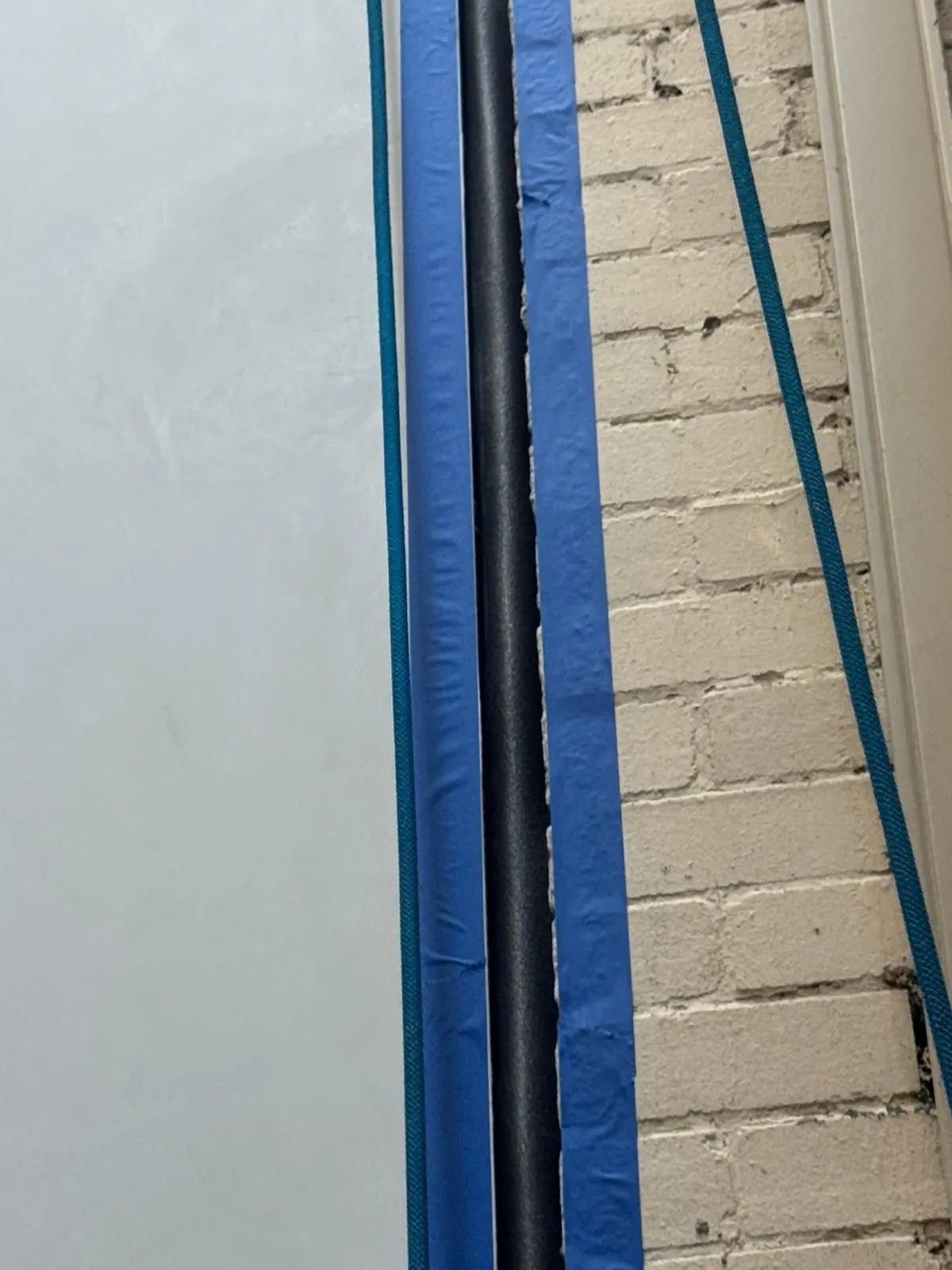
Façade defect rectification on a 4-storey residential building in Mascot
Stage 1 façade remedial works on a Mascot apartment building: joint and render repairs, balcony pipe penetrations sealed and a concrete patch repair, all from the rope, with a photo report for sign-off.
Read the case study
★★★★★Pleasure working with Isnaldo and the team. Great workmanship and communication.
Eli C., Google review
Need caulking and sealing on your building?
Send the address and a few photos. We reply the same day, inspect for free and give you a fixed-price quote, with our insurance certificates and SWMS attached.
How the job runs
- Joint surveyWe check joints and seals for cracking, adhesion loss and hardening, and photograph failures.
- Quote and sealant selectionThe right sealant type for each joint, with a fixed-price scope.
- Cut out and cleanOld sealant fully removed and joint faces cleaned back to sound material.
- Prime, back and sealPrimer, closed-cell backing rod and new sealant tooled to the correct profile.
- Check and handoverInspection of every joint and a photo record.
How we work with your engineer and builder
Our NSW contractor licence is in painting (478674C). On apartment buildings, concrete, render, sealant and waterproofing repairs over $5,000 may need a licence class other than painting, and remedial work on class 2 buildings falls under the Design and Building Practitioners Act, which needs an engineer's regulated design and a registered building practitioner. On those jobs we work as the specialist rope access contractor alongside your engineer and remedial builder. On commercial and industrial buildings, and for painting, cleaning and inspection work, we contract with you directly. We'll tell you at the inspection which applies to your building.
Technical details
| Joint types | Expansion and control joints, window and door perimeters, cladding panel joints, flashings, penetrations |
|---|---|
| Materials | Polyurethane, MS polymer and silicone sealants from established manufacturers, closed-cell backing rod, primers |
| Method | Full removal, primed joint faces, width-to-depth ratio to manufacturer guidance |
What you receive
- A fixed-price quote after a free site inspection
- Insurance certificates and a site-specific SWMS with the quote
- An IRATA Level 3 supervisor responsible for the work
- Progress photos as the work goes
- A photo report at handover
- A written workmanship warranty on repair and painting work
Questions about caulking and sealing
How long does façade sealant last?
Most façade sealants last around 10 to 20 years depending on the product, joint movement and sun exposure. Hardening, cracking and gaps along the edges are signs it is time to replace it.
Can you seal over the old sealant?
Not if you want it to last. New sealant over old material does not bond properly and fails quickly. We cut out and remove the old sealant first.
Is caulking the same as sealing?
In everyday use, yes. "Caulking" usually refers to filling joints and gaps with a flexible sealant, which is what we do on expansion joints, windows and cladding.
Can sealant replacement be done at the same time as painting?
Yes, and it is the best time to do it. Joints are resealed before the coating goes on so everything is finished together.
Ready for a fixed-price quote?
Send the address and a few photos. We reply the same day, inspect for free and give you a fixed-price quote, with our insurance certificates and SWMS attached.
Read more
See this work on real buildings in our projects, or read about our safety and insurance.